The people building something of their own
Passion > Fame
Zen is a seventeen year old Asian-American filmmaker who makes short films and he holds onto one belief above the rest: that you should create out of love, because passion matters more than fame.
A Mosaic Bridge Project Feature
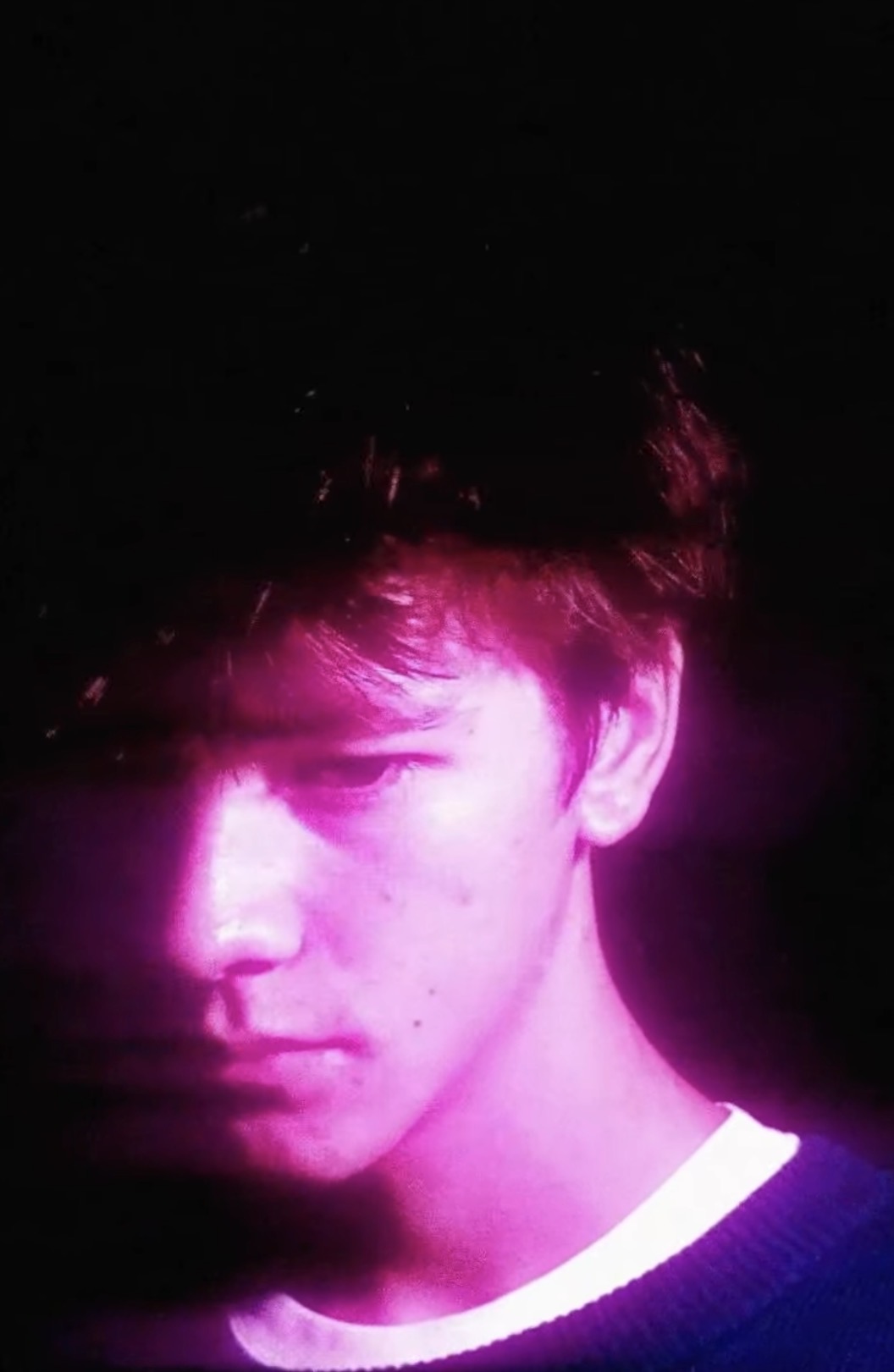
Zen
Filmmaker & Storyteller
Roots
Japanese-American; raised between Japan and the United States
Drawn from
Schyguyy, Interstellar, Dead Poets Society, The Perks of Being a Wallflower, 10 Things I Hate About You
Some people discover art, and others are simply raised inside it, and Zen belongs firmly to the second kind. He is seventeen, Asian-American, and a filmmaker, and he grew up in a home where making things was about as ordinary as breathing, with a grandfather who writes novels, a father who built a video game and published a comic book, and a whole branch of the family that earns its living by creating something.
His mother is Japanese and his father is American, so his early years were spent moving between two countries, and the one thing that never changed from place to place was that he was always somewhere in the middle of making something. Throughout elementary school in Japan he wrote comic books to pass around to his friends and built small worlds out of stop-motion Lego films, and it was somewhere in those years that he started watching YouTube, with no idea yet that it would one day become the place where he taught himself nearly everything he knows.
Learning by making
The watching turned into doing once he moved back to the States in middle school, and his first channel grew into a sprawling and wonderfully unfocused playground that held everything from showcases of intricate builds to video essays about outer space narrated entirely through Lego to fully animated short films, all of it stretched across roughly four years of steady uploading. A second channel devoted to what he proudly called cinematic Minecraft videos ran right beside it, and although he looks back on those now with a fond sort of embarrassment, the impulse underneath them was already pointing the right way, because even then he was reaching for something that felt like real cinema rather than something that merely passed the time.
The turn
Everything changed during his freshman year of high school, on the night he watched "Interstellar" for the first time, when he understood with sudden, total clarity that filmmaking was no longer a passing interest but the thing he genuinely wanted to give his life to, and not Lego movies or Minecraft movies any longer, but live-action films with real weight behind them. He shot a handful of rough sketch comedy clips on his phone in the meantime, and then he bought his first proper camera, and the very first thing he made with it, a video called "What makes liminal spaces so comforting," is one he still believes holds up today, partly because it is genuinely good and partly because it marks the moment the whole thing stopped being play and started being a calling. He fell for the craft completely after that, working his way through hundreds of videos on cinematography, storytelling, visual effects, and directing, carried along by the editing instincts and the working knowledge of how the algorithm actually moves that four years of uploading had already pressed into him.
The courage to be seen
What rarely gets talked about is how much nerve it takes to share something you made with hundreds of classmates who are certain to watch it, and this is a fear Zen came to know intimately. He found his way through it with help, because he is a dedicated actor at his school and the theater community that comes with that turned out to be a circle of friends who believed in him without hesitation, and between their encouragement, the steady support of his parents, and a love for the work that he simply could not keep contained, he pushed through the fear long enough to start posting, and then he never really stopped.
What moves him
The fingerprints of his greatest influence are all over his earliest films, an artist named Schyguyy whose surrealist work Zen fell for not only because of how it looked but because of where it was made, since Schyguyy built his films out in the midwestern suburbs, and that single detail meant the world to a kid who had spent years convinced that his own suburban surroundings were the very thing holding him back. His more recent films have begun to borrow from the tender, aching register of coming-of-age stories like "Dead Poets Society," "The Perks of Being a Wallflower," and "10 Things I Hate About You," though when you press him on what inspires him the most, he sets all of that aside and points instead to something far less cinematic and far more sincere, which is that the everyday beauty of his family and his friends fills his life so completely that the ideas seem to arrive on their own, and he counts himself genuinely lucky for it.
Neil's House
The recognition arriving now is unlike anything he has felt before, and all of it leads back to a short film called "Neil's House," the most personal and heartfelt thing he has ever made, which found its audience when one of the promotional reels he cut for it caught fire on Instagram and carried his entire account along with it. The numbers, though, are not the part that stayed with him. What truly moved him was that people cared enough about a small reel to seek out the full film, and that once they had watched it they came back to him in comments and long private messages to tell him how closely they recognized themselves in the character's struggle, and how the film had stirred something in them that made them want to go and create something of their own. That, for Zen, is the entire reason any of this is worth doing, and he says it with the kind of unguarded honesty that makes the feeling land instead of reading as a cliché, because he plainly means it when he explains that the views and the metrics are only the scaffolding that lets him build on a larger scale, while the real reward will always be a stranger choosing to spend a small piece of their day to tell him that his art made them want to make art too.
What's next
When Zen talks about the future he talks about directing, and he does it with a conviction that refuses to apologize for itself, describing this strange new era of bedroom filmmakers reshaping what is possible as an open invitation to young artists like him, and saying plainly that his work will one day reach the big screen. Beneath that ambition sits a belief he keeps returning to, that a real and genuine love for an art form tends to bring success along with it in time, but only when the work is made for the love of it rather than for the pull of fame, and it is that exact order of priorities, passion placed firmly ahead of fame, that he holds onto more tightly than anything else. Asked to sum himself up, he turns away from any grand version of the story and offers something gentler in its place, calling himself a normal kid from the suburbs who loves making art and gives it everything he has. The films he has already made, and the strangers who have started to find pieces of their own lives folded inside them, are proof enough that there is nothing ordinary about him at all.
I will be forever grateful that I am in a position to give people inspiration.
Zen
Selected Work
A piece from Zen